Qin Dynasty
Introduction
The Qin Dynasty (221-206 BC) marks one of the most significant periods in Chinese history, as it established the first unified Chinese empire. The dynasty was founded by Emperor Qin Shi Huang, originally known as Ying Zheng, who was the king of the Qin state during the Warring States period. The unification of China under the Qin Dynasty was achieved through a series of military conquests, which culminated in the defeat of other rival kingdoms. This period is renowned for its centralized bureaucracy, standardized systems, architectural achievements, and far-reaching influence on subsequent Chinese dynasties.
Unification and Governance
The unification of China by the Qin Dynasty occurred in 221 BC, when Ying Zheng, the ruler of the Qin state, defeated the last of the rival Warring States. Upon unification, he declared himself Qin Shi Huang, the First Emperor of China. His reign marked the beginning of a centralized imperial system in China, characterized by the establishment of a uniform legal code, standardized weights and measures, and a single currency. Qin Shi Huang also implemented a uniform writing system, which helped to facilitate communication across the vast empire. The political and administrative reforms introduced under his rule laid the foundations for the future governance of China.
The Great Wall and Infrastructure
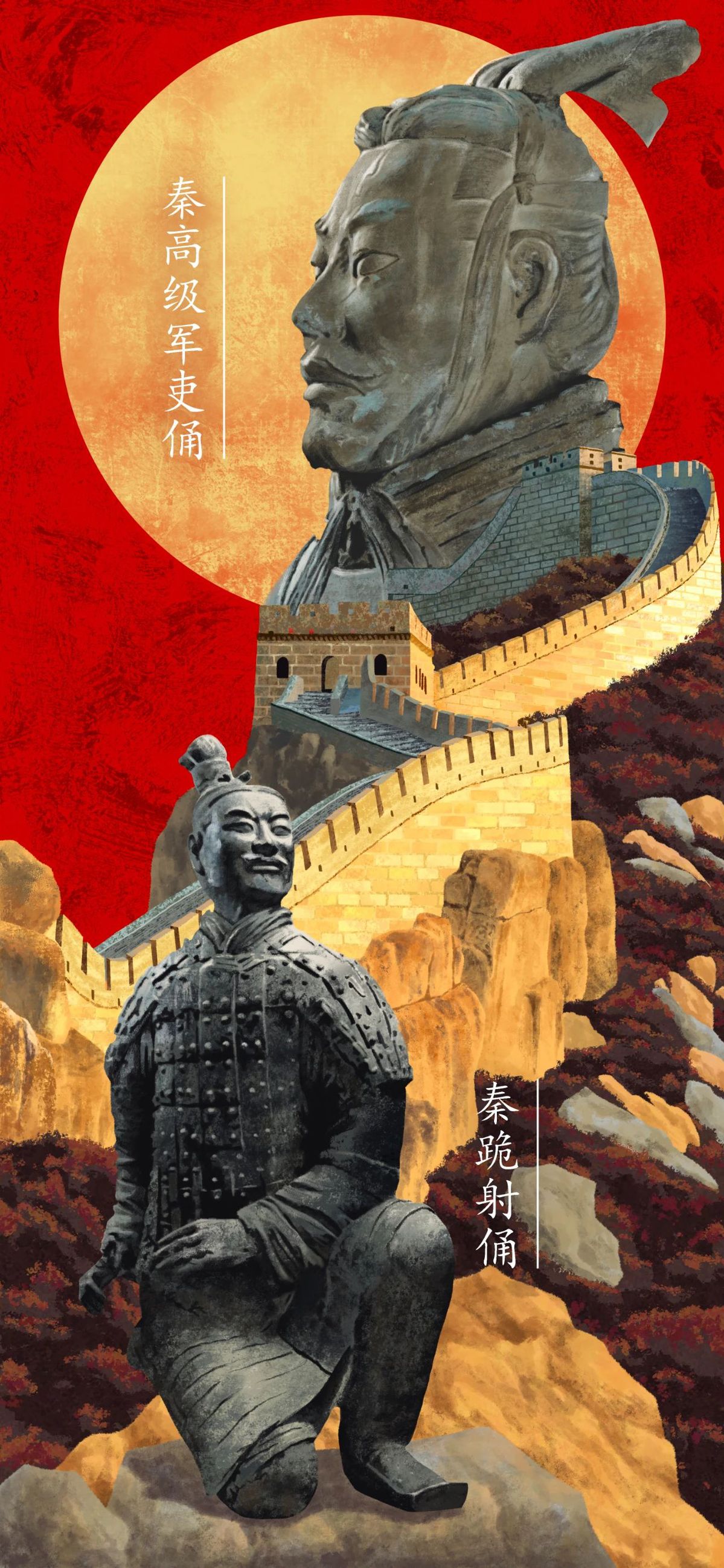
One of the most iconic legacies of the Qin Dynasty is the construction of the Great Wall of China. The Qin Great Wall was built by integrating and extending the existing fortifications of the states of Qin, Zhao, and Yan. This fortified wall stretched from Lintao in the west to Liaodong in the east, spanning over 5,000 kilometers. The construction of the Great Wall served as a defense against nomadic invasions from the north and exemplified the Qin Dynasty's emphasis on large-scale infrastructure projects. In addition to the Great Wall, the Qin Dynasty invested in building roads and canals to improve transportation across the empire, including the famous Lingqu Canal.
Terracotta Warriors and Archaeological Discoveries
The Terracotta Warriors, discovered in 1974 near Xi'an, Shaanxi province, are one of the most significant archaeological finds from the Qin Dynasty. These life-sized clay soldiers were created to accompany Qin Shi Huang in the afterlife, and they provide insight into the military power and artistic achievements of the era. The mausoleum complex where the warriors were found also includes other artifacts such as bronze chariots and horses, reflecting the advanced metallurgical techniques of the time. Continuous excavations and discoveries in the mausoleum have provided valuable information about the burial practices and cultural aspects of the Qin Dynasty.
Cultural and Technological Contributions
The Qin Dynasty made significant contributions to Chinese culture and technology. The introduction of a standardized script played a crucial role in unifying the diverse linguistic groups in China, and the use of legalism as a guiding philosophy influenced the administrative and social structure of the empire. The period was marked by advancements in metallurgy, as evidenced by the intricate bronze artifacts and weapons unearthed from Qin archaeological sites. The dynasty's efforts to improve agricultural productivity and economic integration also contributed to the development of a cohesive and prosperous society.
Legacy and Influence
Although the Qin Dynasty was short-lived, lasting only 15 years, its impact on Chinese history was profound. The administrative and institutional framework established by Qin Shi Huang provided a model for subsequent dynasties, particularly the Han Dynasty, which succeeded the Qin and retained many of its reforms. The concept of a centralized imperial rule continued to shape China's political landscape for centuries. The Great Wall and other infrastructural achievements of the Qin Dynasty remain enduring symbols of the dynasty's ambition and engineering prowess. Despite its collapse, the Qin Dynasty is remembered as a transformative period that set the stage for the future of China as a unified civilization.
Archaeological Discoveries and Research
In recent decades, archaeologists have made numerous discoveries that have enriched the understanding of the Qin Dynasty. Excavations at the Xianyang site in Shaanxi province have revealed the remains of palaces, workshops, and other structures, shedding light on the urban planning and architectural practices of the Qin capital. Artifacts such as jade cups, bronze vessels, and pottery provide further insights into the daily life and cultural practices of the time. The study of these relics has enhanced the appreciation of the Qin Dynasty's contributions to Chinese civilization and has fueled ongoing research and interest in this pivotal period of history.








